By Tye Tomchak, Desert Eagles Model Airplane Club treasurer
Email: [email protected]
Website: deserteaglesrcclub.com
Well, it happened … The Desert Eagles Model Airplane Club in Idaho Falls, Idaho, received the news that all clubs dread. The grass field that we had improved for nearly 30 years was going away. The county was expanding the gravel pit that we had built our field on.
Not to be deterred, the hunt for a new field was on, especially since we were only one of two clubs left within the valley.
We contacted the Bureau of Land Management (BLM) Department of Parks and Recreation and met with the county. We spent several days with the BLM looking at different sites, but none could support an airfield. We spent weeks just driving around the country in hopes of finding some ground that would support one.
One day, however, President Stu Eddins asked us to come and look at a place called Noise Park, which is operated by the City of Idaho Falls eight miles from the city limits and the main airport.
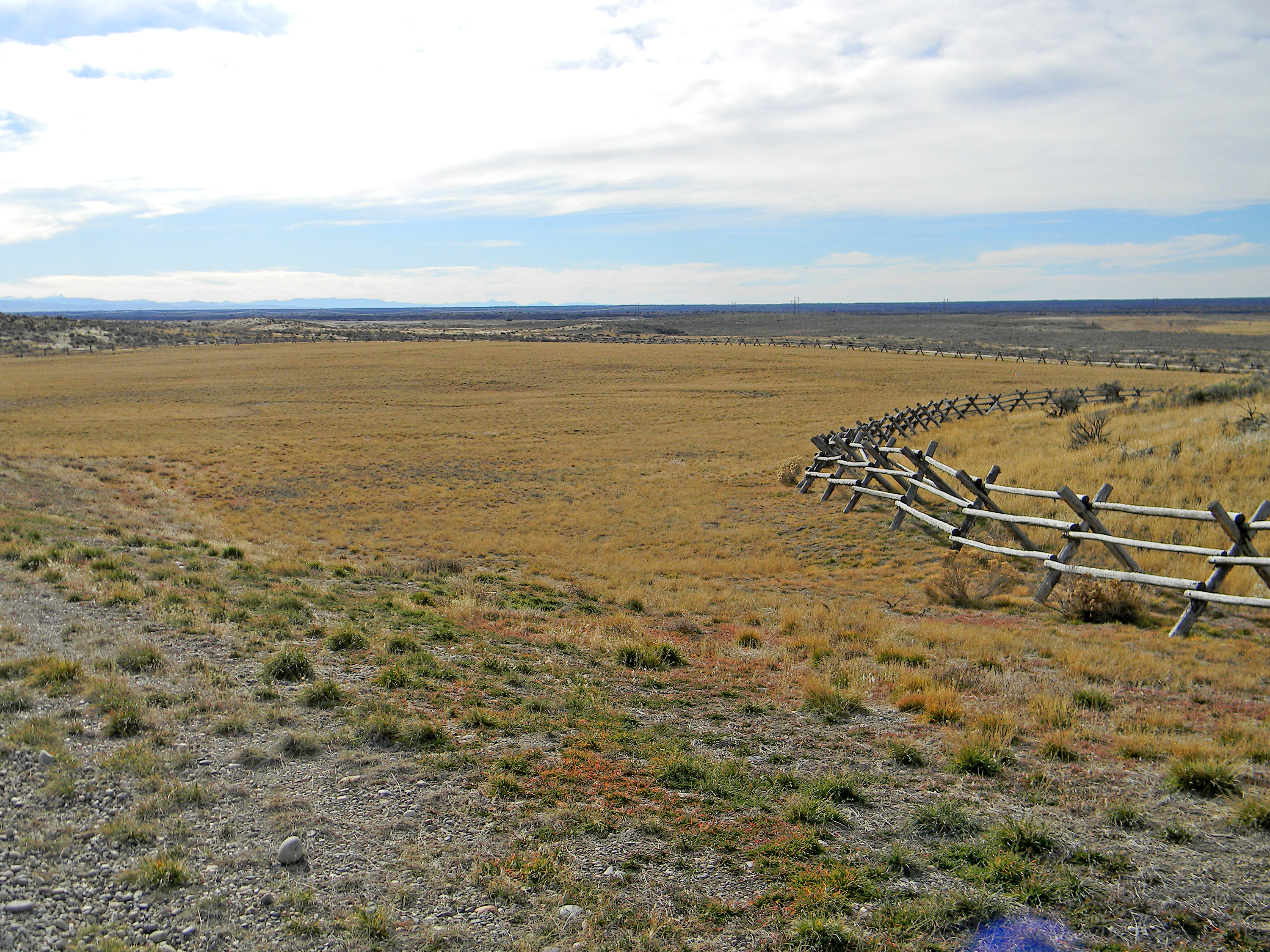
Noise Park had a dirt track car raceway, a motocross track, and a motorcycle cross-country trail, but, most importantly, it had an area that could support an airfield. We contacted the car and motorcycle groups, and they were ecstatic to have another hobby footprint at Noise Park.
Now it is late summer of 2025. We contacted the city parks and recreation director and set up a meeting. We explained to him who we were and what we did. We also explained that we were self-sufficient, meaning that we did not need any city help to build or maintain our airfield—we just needed the area. Thanking him for his time, we were hopeful, especially since we had found nothing else.
A couple of weeks later, the parks director contacted us for a copy of our existing lease. We were hopeful that was a positive sign. Low and behold, a couple of weeks after that, we received a lease agreement from the City of Idaho Falls. There were several sticking points in the lease, but after our lawyer and a member’s insurance agent met one-on-one with the city attorney, the sticking points of the lease were resolved. The new field was a go!
We then needed to figure out the size of the field, pits, runout, and parking lot. Fortunately, we had our previous grass field as an example. We decided on a 400- x 75-foot runway with a 30-foot runout on each end.
The pilot station area would be 180-feet long and 45-feet deep centered on the runway with a 4-foot chain-link fence for safety with two exits to the runway. Another 45-feet deep for airplane stands and the assembly of airplanes would be added.
The parking lot would be 180-feet long and 100-feet deep so that members with trailers could pull into the parking lot and be able to back into the pit area.
It is now the fall of 2025; what flying surface should we install? We had no access to water, so our runway surface options were limited to: 1. Dirt that was immediately dismissed; 2. Geotextile material; or 3. Loaded synthetic turf. Most of us didn’t know anything about loaded turf, but it is what is used on sports fields. The turf has blades of artificial grass that are 1 to 2 inches long, and after the turf is laid down, it is filled with small pieces of rubber for cushion, stability, and traction.
One member sent us a Facebook link several months before we started the field process about someone selling some used loaded artificial turf. We called the turf seller and started asking him questions about it. Knowing that it was 200 miles away, we decided to look at it and get a sample.
Trip one: We acquired an 18- x 18-inch sample of the loaded turf and one sample of unloaded turf and brought it back to the club membership. The loaded turf showed promise, but we decided that we needed to see it on a larger scale.
Trip two: We contacted the seller and drove to the field where he was going to be replacing the turf. We also took two small electric air planes to see how they would taxi and takeoff. The taxi test was amazing. The filled synthetic turf was smooth, forgiving, and flat. It was like rubber asphalt. We were sold!
Each roll of the used loaded turf is approximately 15 x 45 foot weighing 3,500 pounds, so we decided that we would install the turf on the runway and in the pits, which would take 70 rolls. With the turf being this heavy, there would be no staking it down or gluing it together like what would have to be done with the geotextile material.
Keeping in touch with the seller throughout the winter of 2025, we were hopeful that we would get the turf before we had to leave our existing field in August 2026. In May 2026, the seller contacted us and said the turf would be available in a week.
Trip three: we drove there to ensure that the loaded turf would work. It was the best of all of the turf that we had looked at. The blades of it were laying down instead of standing up, making it even smoother. Even better, it was from a soccer field, so there were not so many white lines or numbers.
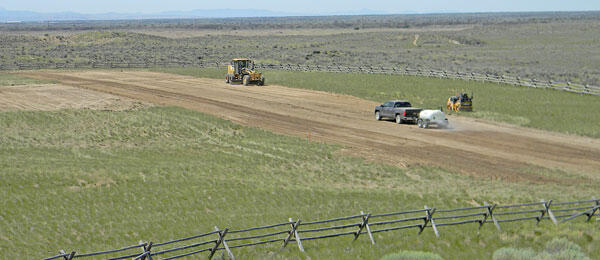
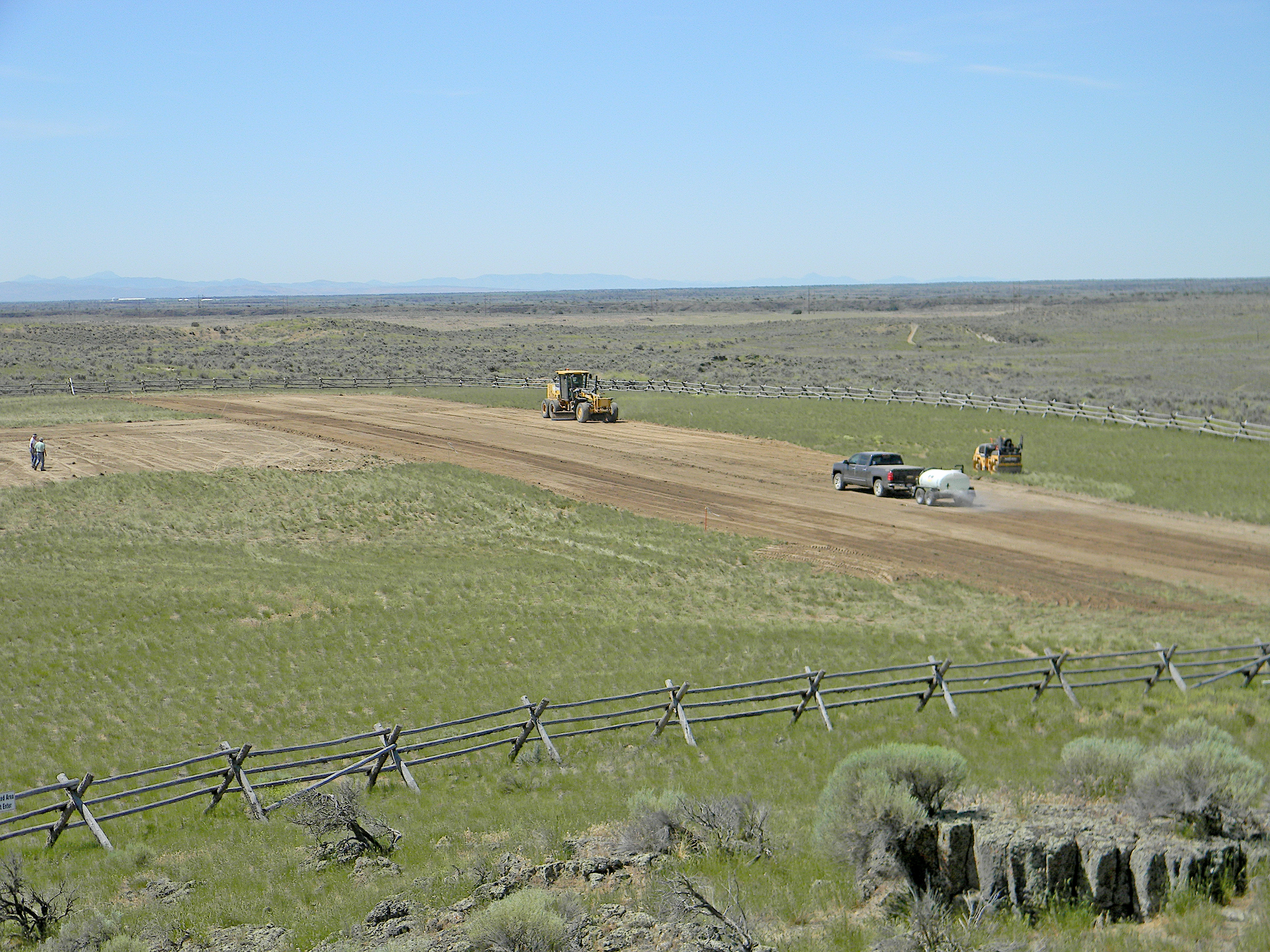
It took six semi truckloads to deliver the 70 rolls of turf. On June 15, 2026, we hired a road grader to start prepping the runway, knowing that prepping it would be the most important step in the whole process because a smooth surface would translate to smooth turf. We also put road-base gravel in the parking lot and watered and rolled it for a firm surface.
On June 17, 2026, we started laying the turf with machinery we rented, pulling the turf around with a clamp that we designed. The clamp consisted of a 15-foot piece of 5-inch channel iron right-side-up, and then a 15-foot piece of 2-inch channel upside-down with the turf in between the channel iron. Both channel irons were clamped together with C-clamps. This enabled us to pull the 15- x 45-foot piece of turf into place. We carefully overlapped each piece and cut through both layers simultaneously with a 10-inch blade walk-behind lawn edger that would cut plastic to ensure a perfect seam.
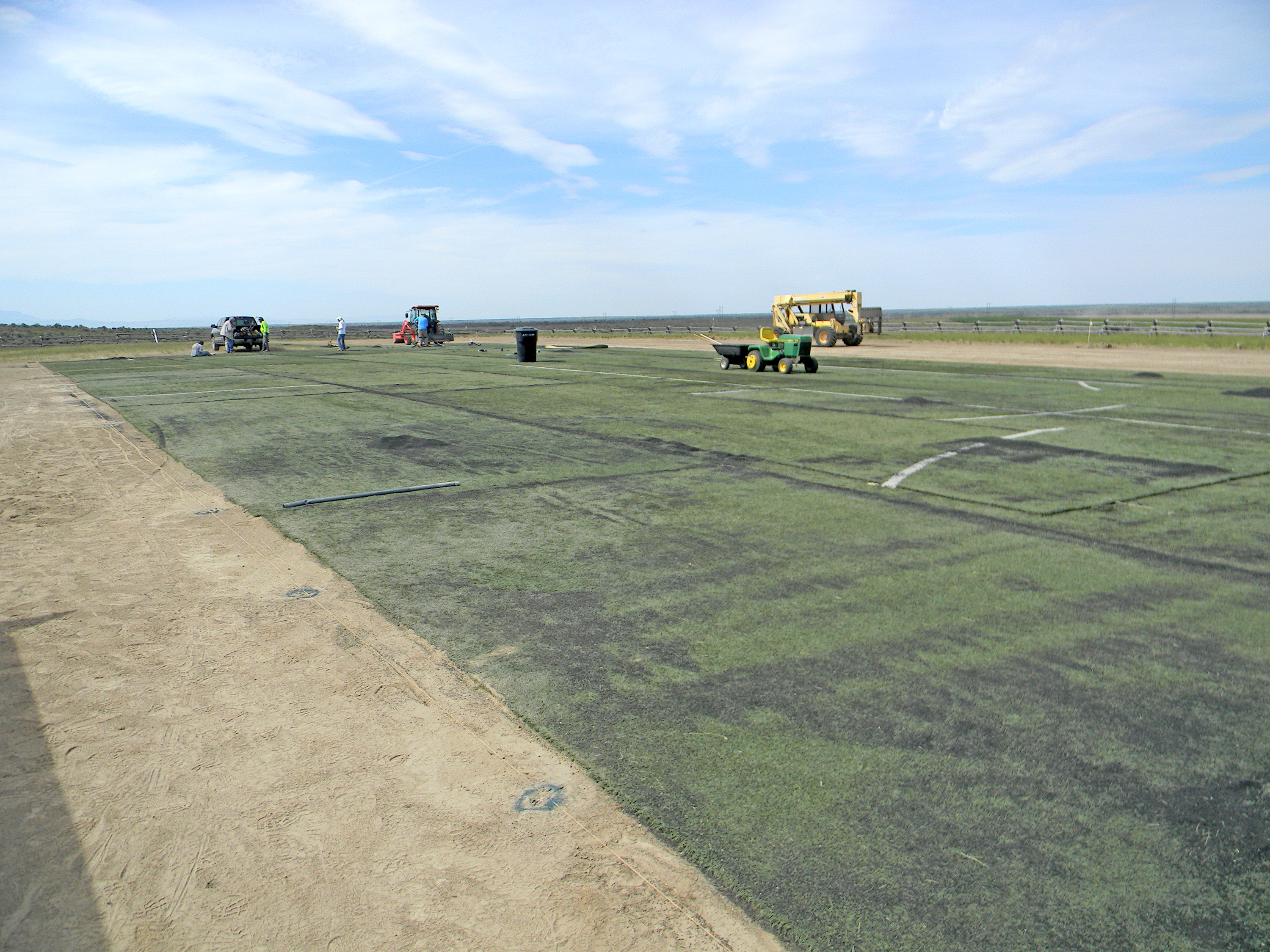
Because of the heat and the field crew being retired, we only worked on the field from 7 a.m. to noon four to five days a week. We completed laying the turf in just seven weeks. It took another week to move the container, shelter, and parking lot ties. We took our time to complete the field and worked together so that we had no injuries or problems. Nobody got hurt—not even a Band-aid.
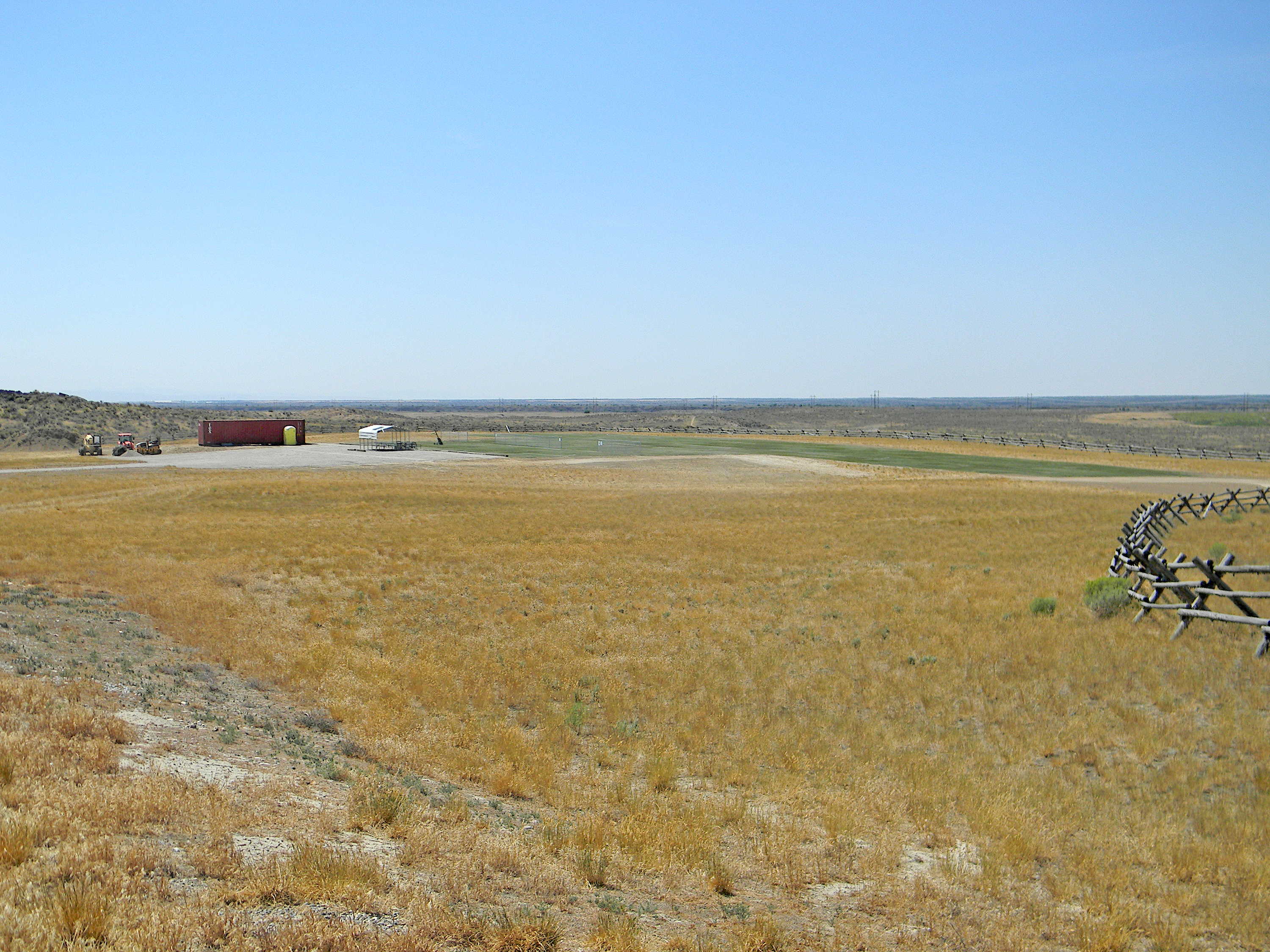
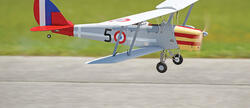
The result is fantastic. The runway is as smooth as silk. Airplanes of all sizes can fly off of the new runway without hesitation. Gliders can land without any damage to the fuselage, and the turf does not need to be repaired because of propeller strikes. It is even very forgiving to film-covered airplanes. It is the closest thing to a maintenance-free field as you can get—no mowing and no watering!
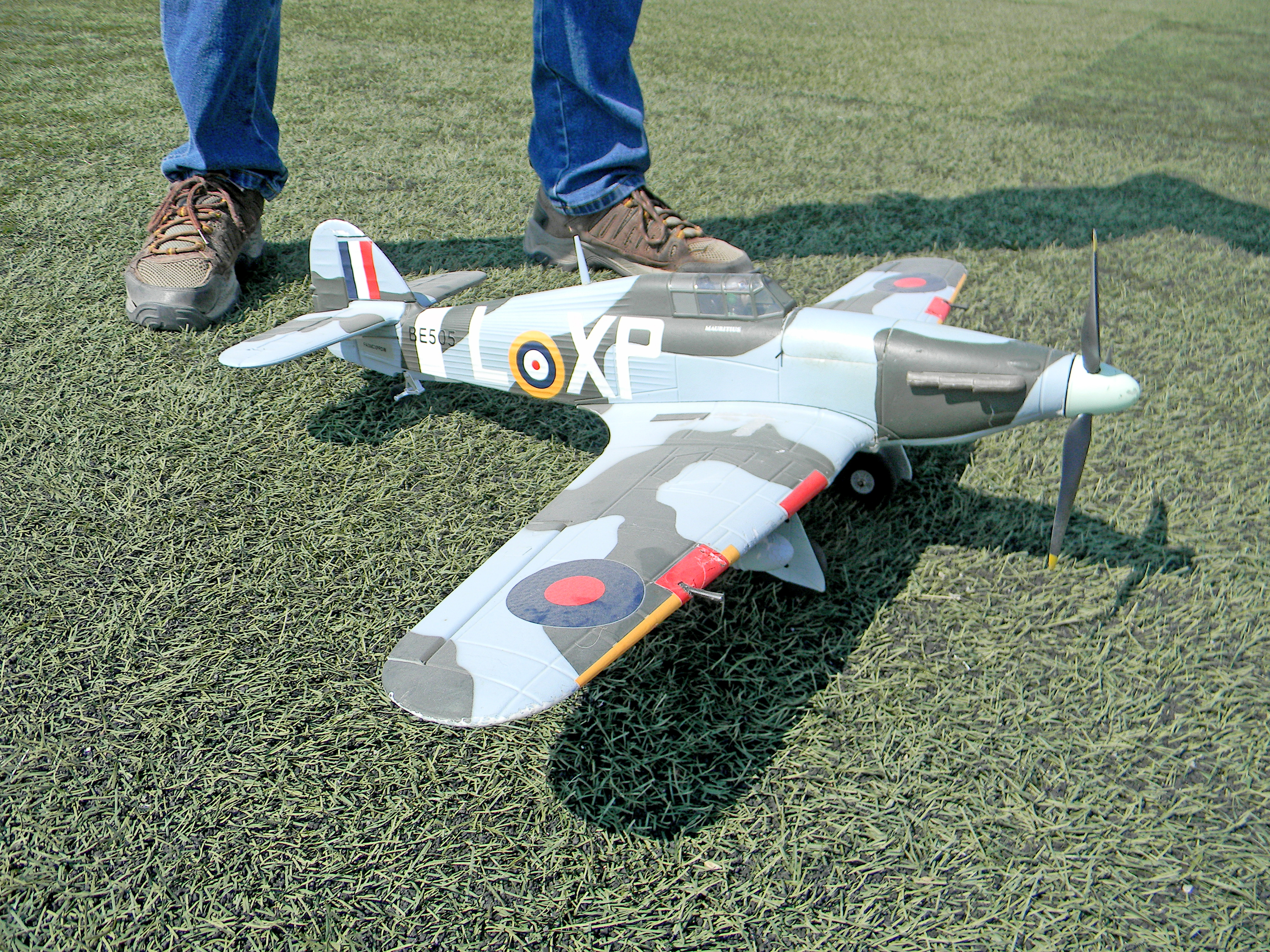
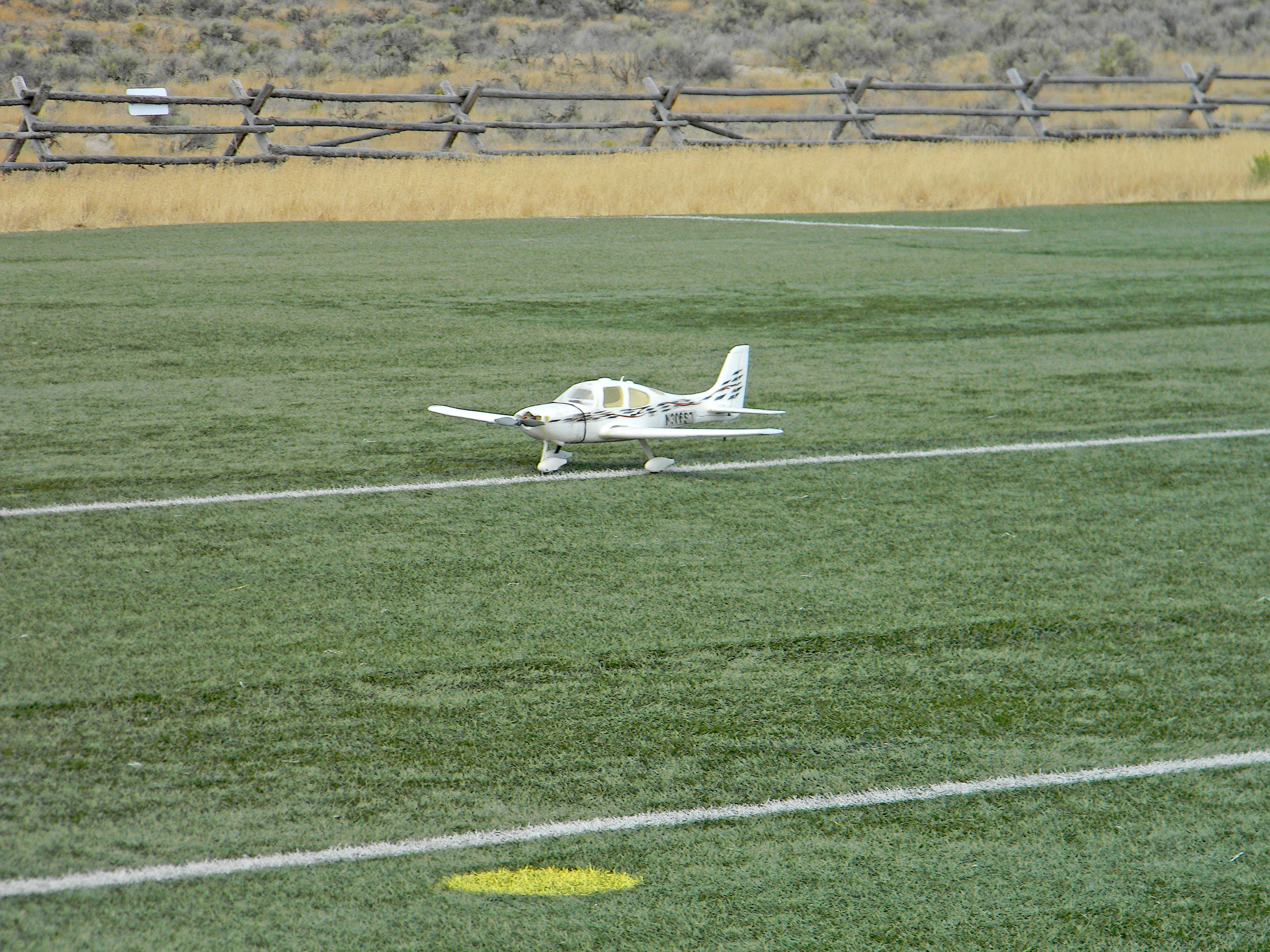
Since we are only 100 miles from Yellowstone National Park, Jackson Hole, Wyoming, and Sun Valley, Idaho, you should plan a vacation and come see this field in person. Don’t forget to bring an airplane to fly!
This truly is a “Field of (Better Than) Dreams.”




Comments
Add new comment