NO MATTER the skill level, every Free Flight (FF) Scale modeler benefits from a challenging project.
My favorite deep dive into the unknown began in 1999 when the late, great Bill Hannan sent me a plan that was created by his dear friend (and mentor to many) Ulises Alvarez from Uruguay.
It was a Peanut Scale plan for the Airco DH.2, which was powered by two rubber motors but with the propeller positioned in between. Talk about a challenging subject—this one was loaded! A 1915 biplane pusher with tailbooms and seemingly yards of rigging wire, this design was as far as I’d ever been from my usual modeling subjects. I had to brainstorm with my pals to figure out how to stooge and wind the model. Having built FF Rubber Scale models for approximately 10 years, I felt that this was a project to learn from on many levels.
I fully enjoyed the build, which took a surprising six months to finish, but having three youngsters, a mortgage, and a freelance career that was deep into book cover art, I’m sure that there were days and weeks at a time that never saw balsa sticks and tissue come together.
With the rush of attending the 2000 Flying Aces Club (FAC) Nats in Geneseo, New York, looming, I only had time for a few backyard test flights, so I was pleased when I was able to trim it at the contest and achieve a flight of 38 seconds after adding a long motor stick out the nose. I wasn’t thrilled with the look, but at least I was able to see it fly.
Two years later and craving more duration, I took a bold step and switched it to Power Scale, installing a tiny Brown A23 CO2 motor into the tight quarters of the short fuselage. A week before the contest, however, a squirrel entered our house through the chimney. As my youngest son chased it around inside, the critter entered my studio, jumping from one shelf to another—most notably, the one with my DH.2 resting safely out of the way. The squirrel thought of the model as a potential joy ride and leaped onto it, knocking it to the floor as its legs became entangled with the struts and rigging. The house was once again free of squirrel after it broke free and bolted out through our opened front door, but it now contained a mangled DH.2.

Aspect Laser Designed by John Hoover
Laser Cut Kits
Complete Hardware
Full Size Rolled Plans and Printed Instructions
15/16th’s RC-2
38" Span $99.99 + Shipping
Lil’ Bubba RC-1
17.75" Span $89.99 + Shipping
Aspect Laser kits are carefully designed to be light but strong!
Visit aspectlaser.com to see all our exciting products! Contact Us: [email protected]
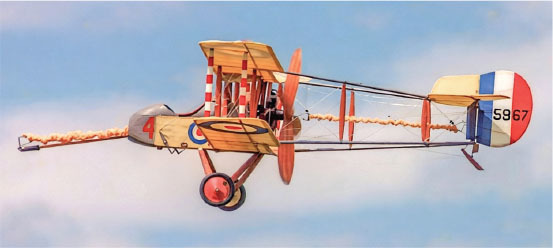
I repaired it quickly in time for the 2002 FAC Nats, where it gave me 78 seconds and a first in Power Scale, but that still didn’t feel like enough duration, so I talked with Dave Rees about using one of his geared Kenway electric motors. From then on, the airplane flew to great heights and did very well at various FAC contests. The DH.2 continued to fly in this configuration until 2014, when it was retired and donated to the AMA National Model Aviation Museum, where it remains in the Peanut Scale display case.
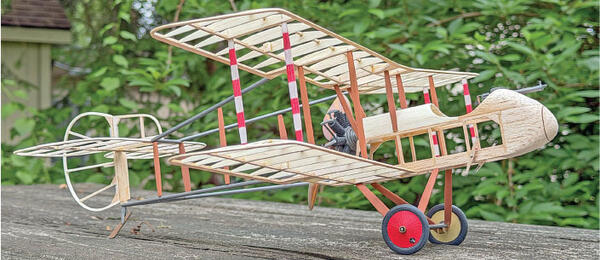
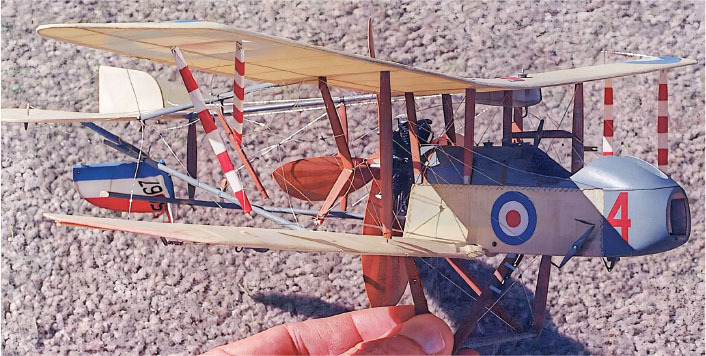
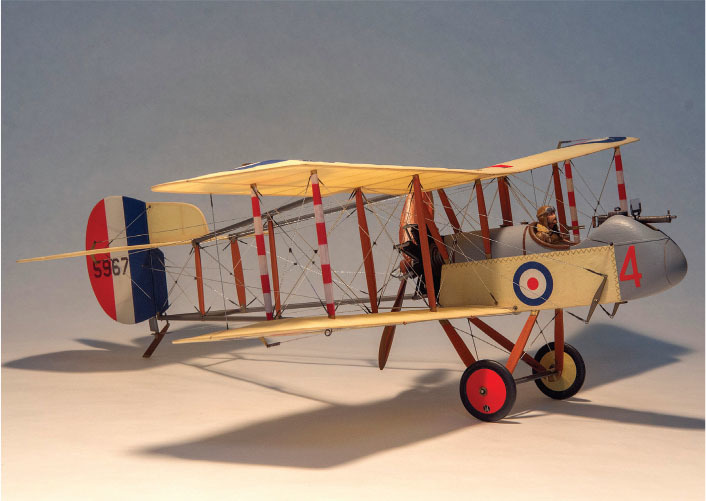
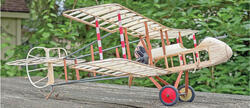
Twelve years later, in April 2026, I had the urge, desire, and need to have another DH.2 in my fleet. It was a self-imposed challenge to test my building skills 26 years after my first DH.2. Like an aging athlete, I wanted to prove to myself that I had the stuff and that I could still build with time-honored classic stick-and-tissue at a high level, but, especially, that I could also trim the model to fly, only this time with a single rubber motor inside the fuselage. It was important to maintain the clean aesthetic of this model in flight. If I could see it fly overhead just one time, I’d be pleased.
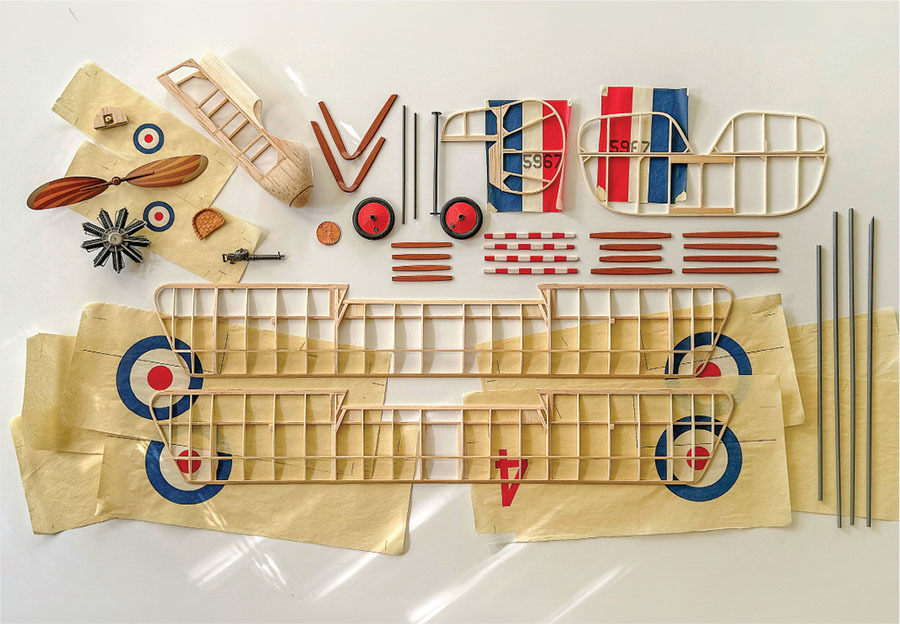
To improve my chances of stable flight, the plan was enlarged to an 18-inch wingspan. It also gave my fingers a bit more room to maneuver. Like a man possessed, I started the model in mid-April, crossing the finish line two months later. Gone were the distractions of three kids, tuitions, and a mortgage, so I was able to give the project most of my attention.
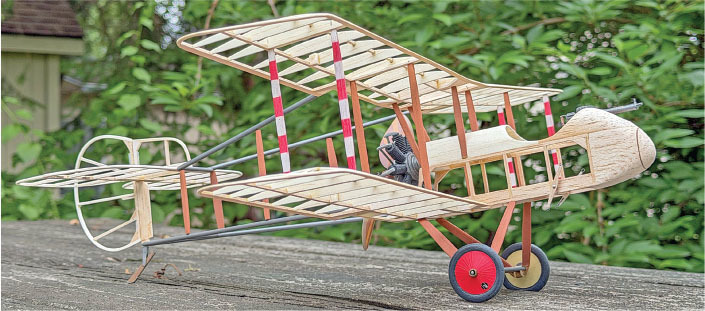
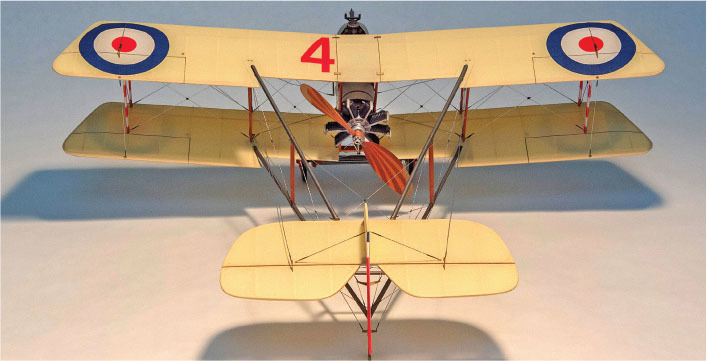
I was surprised by what is best described as muscle memory through various sections of the new build. Areas that required heavy brainstorming, pondering, and planning in 2000 came together this time around with little delay. I’m sure that the 10,000-plus hours of experience since then had a lot to do with it. It was that feeling of being in the zone.
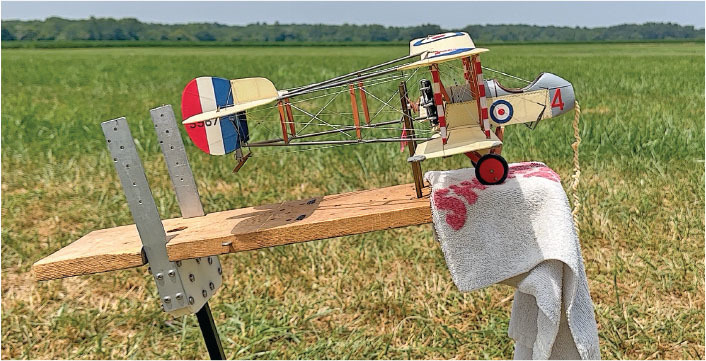
Initial trimming proved to be difficult and time consuming, but it was all worth it and a part of the expected challenges. The airplane had a few stability issues in the first session, such as not reacting well to the increased torque, but after a stabilizer angle change, along with a lower-pitched propeller, the Airco had settled in with a more confident pattern by the time it flew at the 2026 FAC Nats.
Whether it’s building a biplane after only flying high-wing aircraft in the past or trying a 36-inch-wingspan model when previous flyers were in the 20-inch range, the shift away from your usual approach will become a challenge with benefits. Experience breeds success in FF and likely soon leads to experiencing a muscle memory that’s loaded with a growing sense of confidence on the boards and at the trim field.
SOURCES:
National Free Flight Society (NFFS)
Tom Hallman’s MaxFliArt YouTube Channel





Comments
Add new comment