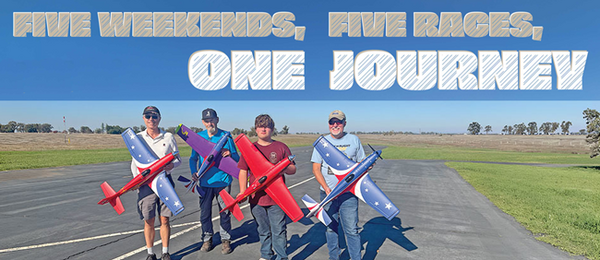
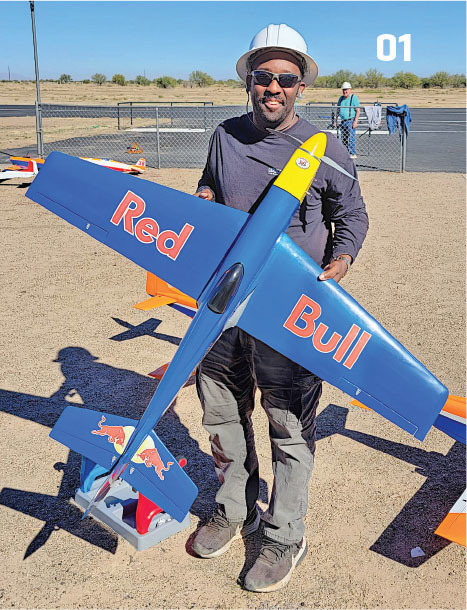
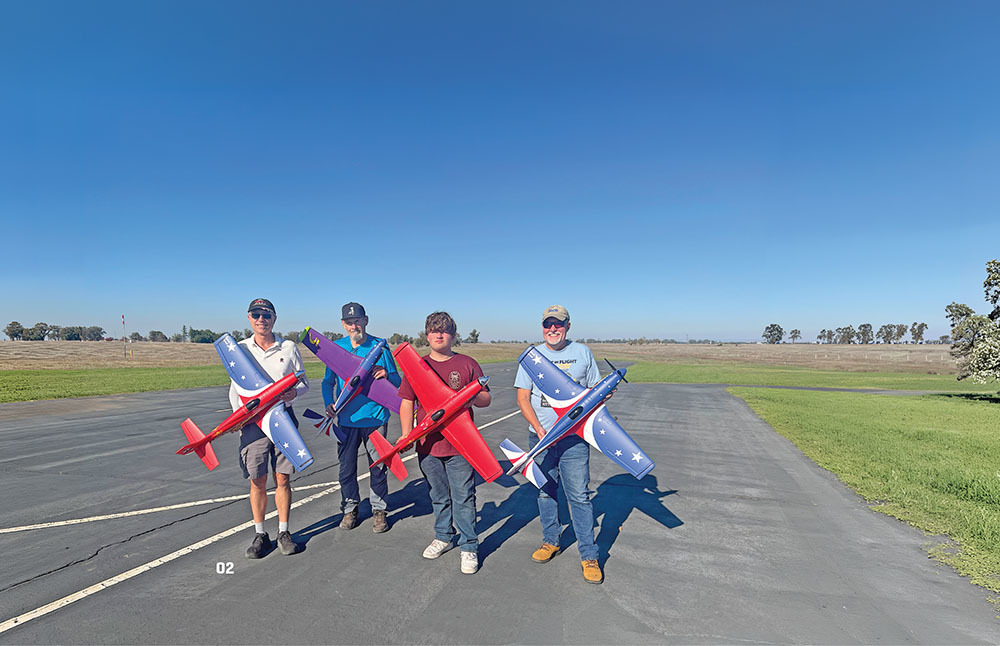
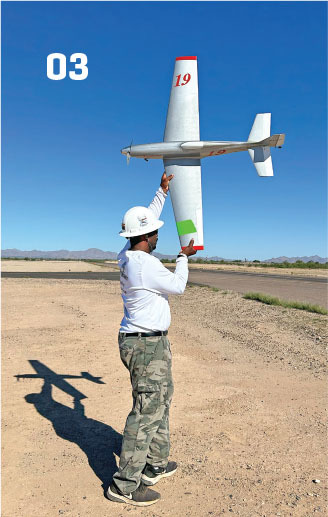
The idea came quietly at first. I had just started a demanding new job and was settling into a rhythm of new responsibilities, travel, and long days. Racing season was approaching fast, and I knew that opportunities to compete don’t last forever. Schedules change, priorities shift, and sometimes an entire year of racing can slip away if you’re not careful, so instead of scaling back, I reached a decision that made little logistical sense but perfect emotional sense: I was going to race five weekends in a row.
Five events. Five styles of racing. Five different locations across California and Arizona. Each weekend required different airplanes, engines, breakout times, and formats—all with their own demands and rhythms. Truthfully, it also happened to be how the race schedule lined up.
It wasn’t just a racing challenge. It became a journey of preparation, endurance, community, and rediscovering why flying has meant so much to me since I was a kid standing next to my dad at our local field.
Week One, Eliminator Series: Three Classes, One Weekend
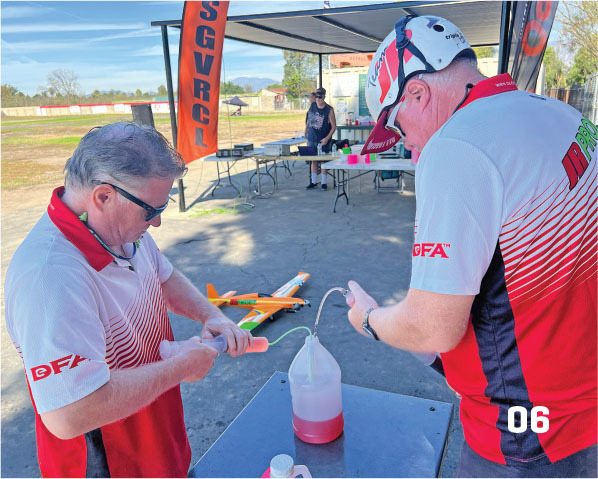
The Eliminator Series in Chino Hills, California, kicked everything off. Right away, I made a choice that guaranteed that the rest of the month would be harder: I entered all three classes: Bronze/Run What You Brought (RWYB), Silver, and Gold. These are bracket-style classes, each with its own airplane and breakout time (the minimum time limit that an aircraft is allowed to post in a race heat).
- Bronze/RWYB: World Models T-34 with an O.S. 55AX engine; eight laps/2:00
- Silver: World Models Vendetta P-51 with a YS-115 Warbird Special; 10 laps/2:00
- Gold: World Models Vendetta P-51 with a YS-115 Warbird Special #2; 10 laps/1:30
Racing multiclasses is not simply more flying—it’s more everything. Between heats, I sprinted through my routine: fuel, glow plug check, propeller inspection, selecting the right airplane and fuel blend, and resetting my breakout mindset. I wasn’t just a pilot; I was the entire ground crew: mechanic, tuner, and spotter for other racers.
Despite the complexity, it turned into a strong weekend. I won Silver, finished second in Bronze/RWYB, and made it to the Gold semifinals. In the Gold finals, the win went to Ben McBride, the event’s contest director (CD) and major sponsor, who earned every bit of that exciting finish.
I drove home tired but energized. One weekend down, four to go.
Week Two, Dave Gavin Memorial: Switching to Three-Pole Quarter Midget
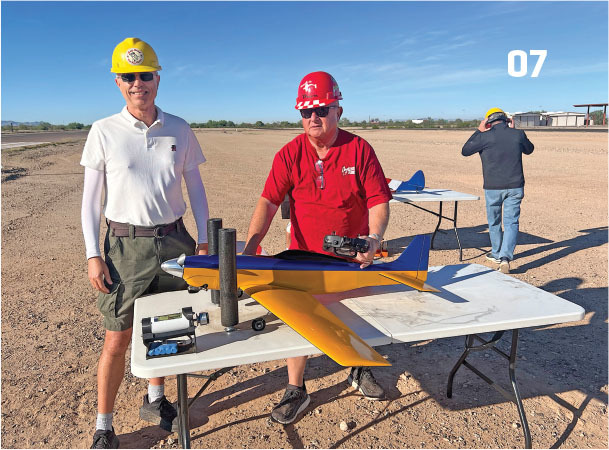
Week two sent me into an entirely different world: National Miniature Pylon Racing Association (NMPRA) Quarter 40 (Q-40)/F3T three-pole Pylon Racing. If warbird racing is the National Hot Rod Association drag racing of model aviation—big power, big noise, tight breakout windows—then Q-40/F3T is Formula 1. It demands precision, discipline, and razor-thin consistency.
My primary airplane was a Harold Sattler composite P-51 Strega powered by a Nelson 40 long-stroke, an engine capable of turning more than 25,000 rpm. The airplane does exactly what you tell it, which is only helpful if you are doing exactly the right thing. That wasn’t me on day one.
The airplane was great, but I wasn’t flying sharply. Fortunately, I had world-class calling help from Jim Allen, whose experience and calming tone kept me in the game. In one heat, I had a fun, chaotic matchup with Gilbert Lucero, the CD and longtime club president. We had helped set up the course together that morning; a few hours later, we were trying to beat each other around the pylons. We both ended up double-cutting and laughing about it afterward.
On day two, I made a big decision to switch to my Galloping Ghost P-51, which was built by Marcelo and the talented Brazilian team. It was the right move immediately. The airplane felt natural and predictable, and suddenly the course became fluid instead of forced. There were no major repairs; only a glow plug swap over the weekend. It was solid flying. By the end of the weekend, I had finished in fifth place on both days—they weren’t podium finishes, but they were confidence-building.
Sometimes the airplane picks you, not the other way around.
Week Three, Mini Warbird Unlimited: Speed Without Limits
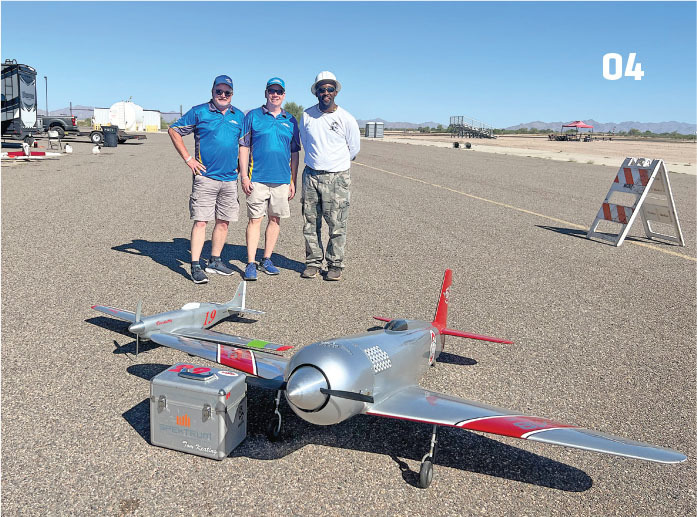
Week three was one of the most anticipated events of the year. A constant buzz had been building through group chats and phone calls with organizer Terry Raymond and major sponsor Tom Easterday. This would be the first-ever Mini Warbird Unlimited event—no breakout times, no limits. Just go as fast as your airplane and nerves allow. This was a race added to the long-standing tradition of Unlimited Scale Racing Association (USRA) Giant Scale Racing, so our airplanes were called Mini Warbirds.
For this contest, I brought my most serious hardware: a custom-built Harold Sattler composite P-51 Vendetta with a YS-115 Warbird Special #2 engine on SRF 50% nitro swinging an APC 13.5 × 13.5 propeller. It’s a setup that rewards commitment and punishes hesitation.
With help from my caller, George Reindenbach, who drove all the way from Sacramento, California, to support me, the airplane ran flawlessly all weekend. I had a perfect score in qualifying; I even won a dashfor-cash heat. I was locked in and ready for a strong finish … but then I made the one mistake racers know too well: I adjusted a perfectly good tune because I was worried about what others might do.
The tune was off, I missed the start, and on a tight six-lap course, you only get one chance. I got beat—clean, fair, and deservedly. Congratulations to Mark Sumich, who ended up winning that class! It stung, but honest losses often teach the most.
Week Four, Sacramento: The Two-Minute Tango
By week four, my energy was thinning, but my motivation peaked again as I headed to the Sacramento Area Modelers’ field for the Big Wood Memorial Race in Sacramento. This one used an elimination-style format rather than a standard points race, which brought a different kind of pressure.
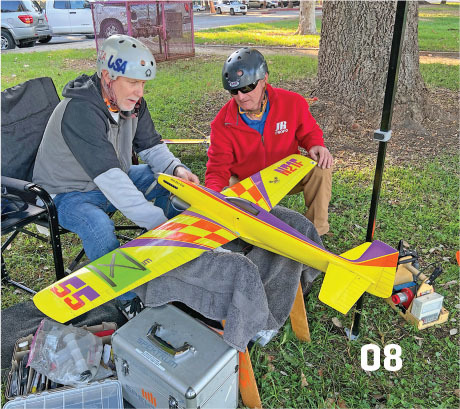
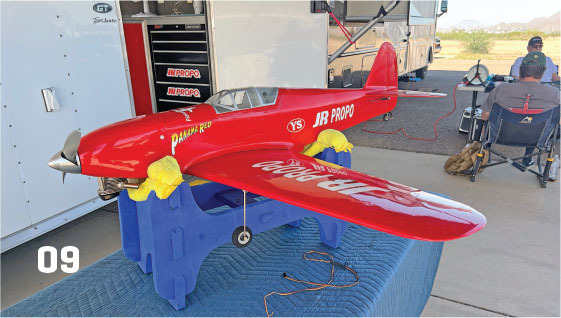
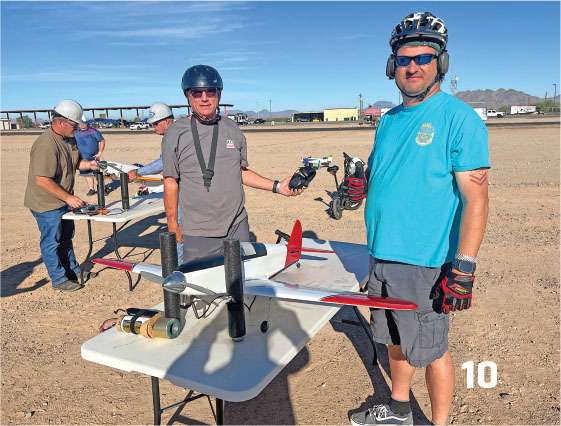
I raced Bronze/RWYB and Silver, using the same T-34 and Vendetta setups from earlier in the month, but the real battle was mechanical: the Bronze engine’s bearing was slowly failing. Even richened, the motor ran hot. Still, after five loyal years of service, it gave me one more day.
I ended up winning Bronze and making the Silver semifinals, where the class win went to Ollie Merrill, who also CD’d the event—a wellearned victory. Most importantly, the streak of racing multiple weekends remained alive.
Week Five, Tucson: The Final Push
The final weekend brought me to Tucson, Arizona, accompanied by my high school friend, Zach Osterhold, who helped all weekend as my teammate and race caller. By the time I arrived, I was exhausted—mentally, physically, and mechanically. My Bronze O.S. 55AX engine finally gave out during the second round. I switched to my backup Vendetta and flew it at half throttle to stay under the breakout. It felt odd flying a Gold-capable airplane at a Bronze pace, but sometimes the only goal is survival.
Despite fatigue, I managed one of my best combined weekends of the entire stretch:
- Second in Gold (lost the tiebreaker for first)
- Third in Silver (lost the tiebreaker for second)
- Second in Bronze
Congratulations to Bill Blake, the CD of the race series, who worked alongside John Gonzalez as the local Tucson CD and beat me in the Bronze class with an airplane that I sold him just a week prior. That’s sometimes how that goes.
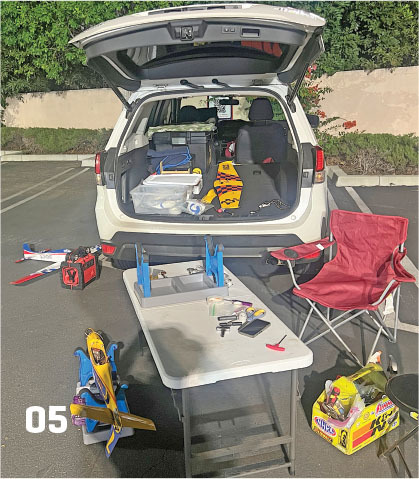
All three classes. All five weekends. Five straight finishes. Somehow no crashed airplanes! As I drove home, surrounded by airplanes, tools, fuel jugs, and empty drinks and snacks, I finally exhaled. I actually did it.
What People Don’t See
Racing looks like a weekend hobby. In reality, it’s a second job—or the hobby that replaces whatever "side hustle" you might have had. It’s the hotel bookings, the late-night tuning, the fuel runs, the glow plug inventory, the route planning, and the group texts persuading friends to come race. It’s asking yourself, honestly, "Can I really do this again next weekend?"
It’s calling my wife between rounds, sharing photos so that she can be a part of the journey when she isn’t there. Her patience and support make everything possible. It’s calling my dad, the man who put a transmitter in my hands when I was four or five years old. Sharing the wins, losses, and funny moments with him ties this whole journey back to where it started.
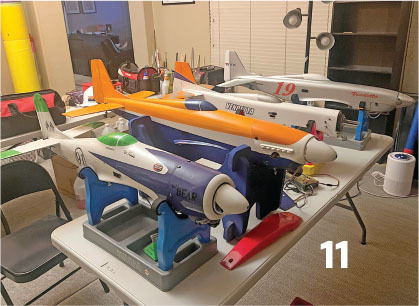
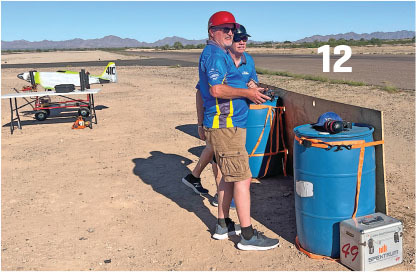
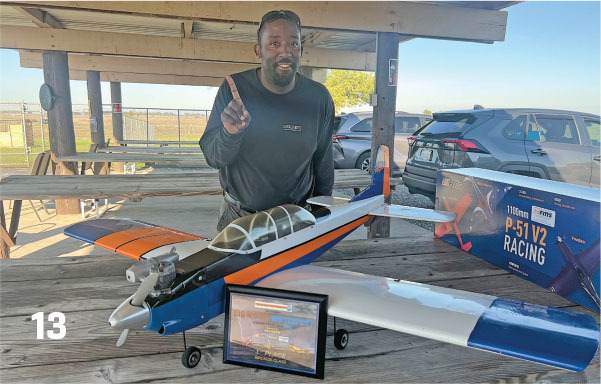
And it’s helping newer pilots—watching first-timers fly their first heat, offering a tip that helps them shave off a second, or seeing their excitement when it all finally clicks.
Why Racing Matters
The hobby is full of so many exciting disciplines, with each offering something special. Racing, however, adds something for me that many forms of flying don’t: purpose. Purpose to fly well. Purpose to fly fast. Purpose to prepare. Purpose to tune with discipline. Purpose to honestly compete. Purpose to improve.
Bronze warbirds fly at close to 110 mph. Q-40 approaches 200 mph. Gold warbirds push the limits of nitro combustion. Each style requires a different mindset, but the heart of racing is always the same: You stand shoulder-to-shoulder with friends, rivals, mentors, and newcomers, sharing the same course, the same adrenaline, the same air. When someone else wins, you cheer for them because their success keeps the community alive.
What This Journey Taught Me
After five weekends, I learned that racing is as much about the people as it is about the airplanes and that stepping outside of your comfort zone creates the most memorable experiences. I learned humility from my failures and gratitude for every moment that went right, and that a bearing failure can be as defining as a trophy. I learned that limits often sit far beyond where we think they are. Most of all, I learned that the passion my dad shared with me decades ago still shapes who I am today.
As long as I can race, I’ll keep showing up. It might not be five weekends in a row every time, but I’ll be there—engine ready, focused, heart pounding, and ready for the next lap.
Thank you to everyone who makes racing possible. I could fill an entire article just about all of you.
SOURCES:
Eliminator Air Racing
NMPRA
San Gabriel Valley RC League Inc.
USRA




Comments
Add new comment